—
Raw Avg: —
2026–27 · Sophomore · USC

Season Archive
2025–26 UTSA freshman-season results, scoring metrics, rankings, and record references.
2026 Summer Amateur Schedule & Results
Results Trend
2026–27 USC Sophomore Season
Results pending. Chart will populate after official tournament results are recorded.
This panel is preserved as an operating metrics structure for Joshua’s 2026–27 USC sophomore season. Values are updated as official tournament results, individual field data, and ranking metrics become available throughout the season.
Archived metrics and rankings are updated after round or event completion as reported by Clippd and WAGR. Current rankings may vary due to ongoing system recalibration and field adjustments.
All performance metrics and rankings are based on official data from Scoreboard.Clippd and WAGR.
Live scoring is available through official channels during tournament play.
Competition Review & Preparation
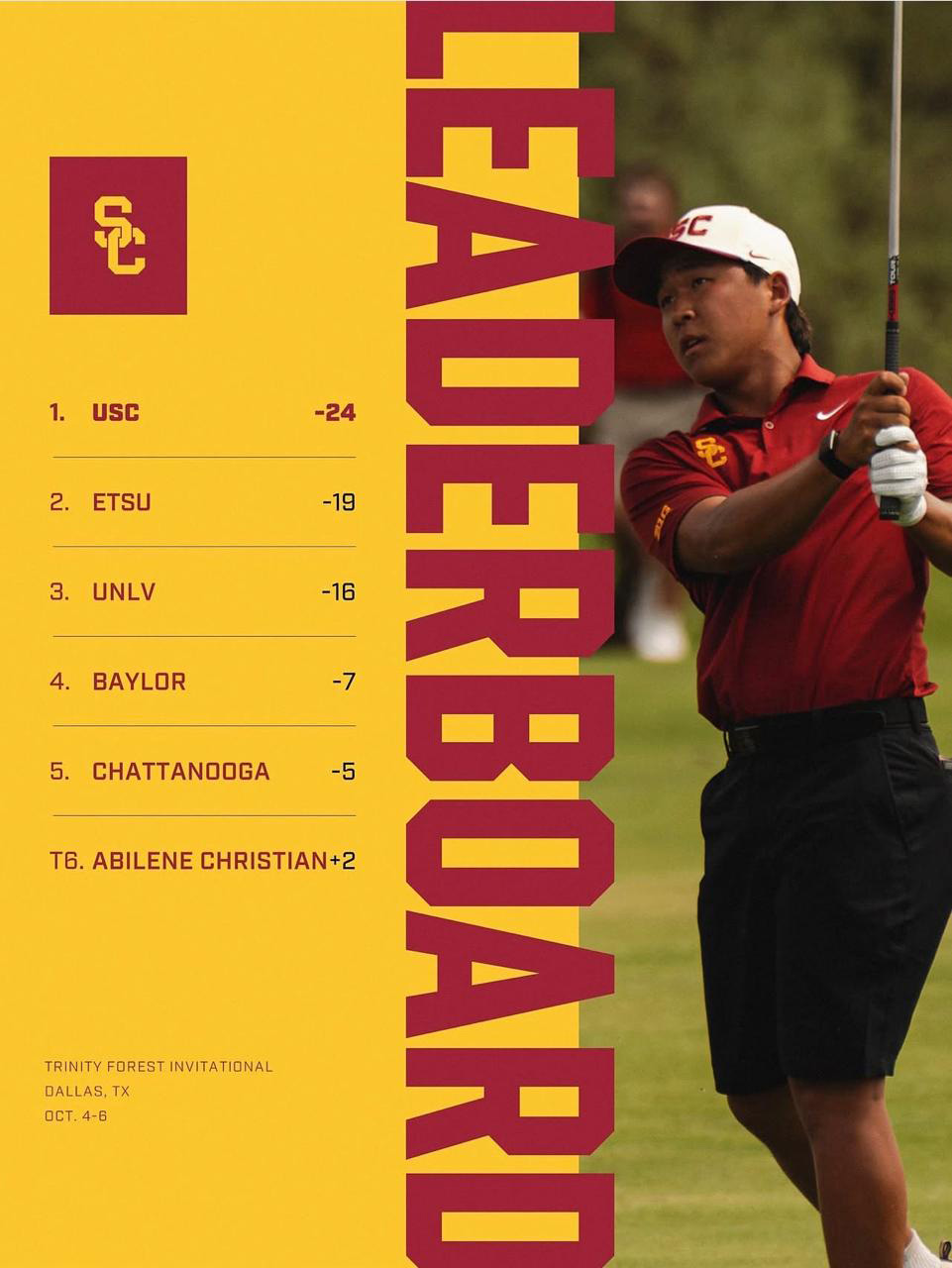
Official Result: Joshua completed the Trinity Forest Invitational at Trinity Forest Golf Club with rounds of 73, 70, and 70 for a 54-hole total of 213 (-3), finishing T21.
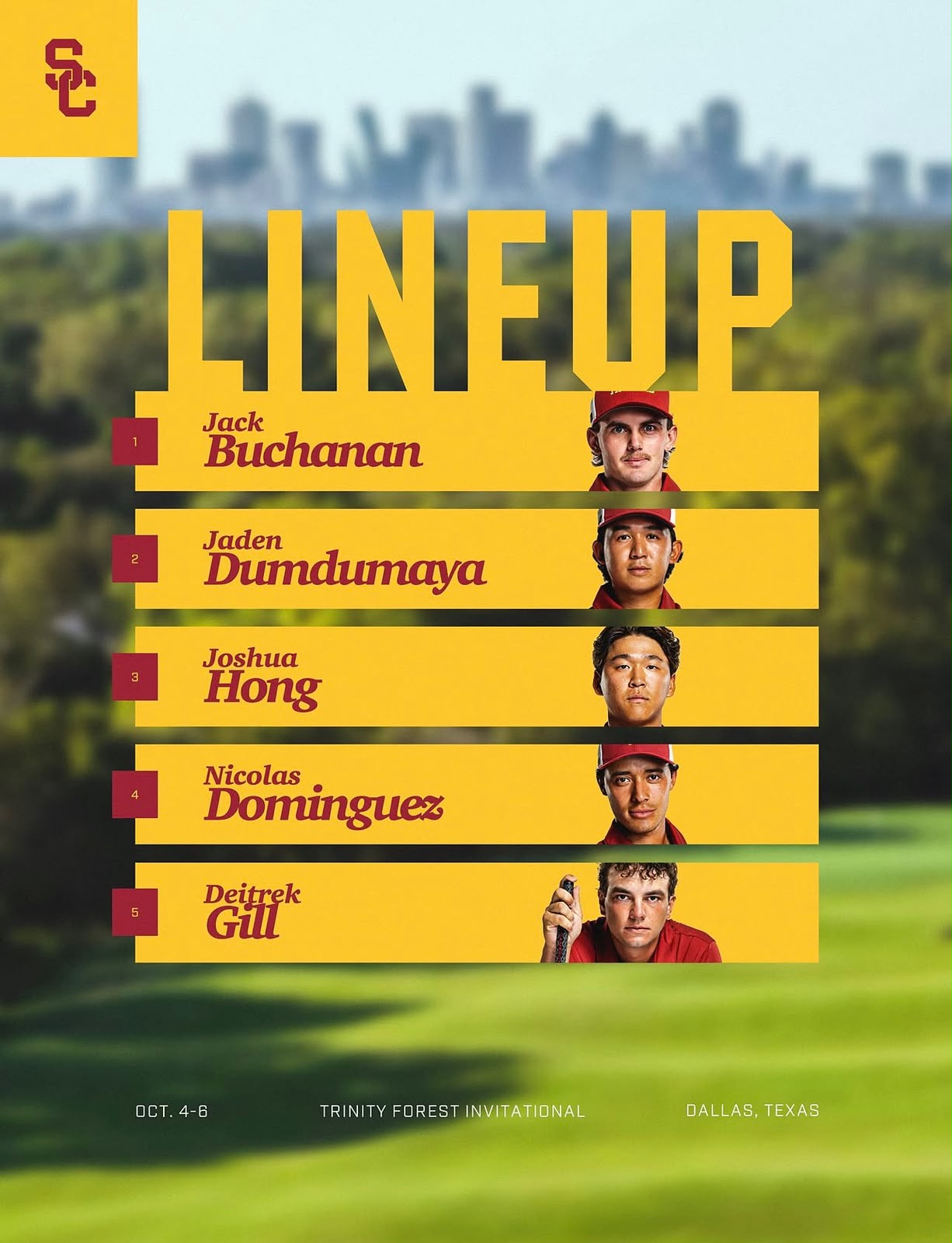
Team Contribution: Joshua’s three rounds were all used in USC’s team score. USC finished second at 29-under par. Across Joshua’s first two appearances in USC’s five-player lineup, all six of his competitive rounds have counted toward the team total.
Preparation Read: The competition week began with an early arrival in Dallas and an initial session centered on putting, short-game adjustment, and adapting to the playing surfaces before the full practice round. Preparation continued to emphasize scoring distances inside 100 yards, greenside execution, putting speed, and maintaining established full-swing patterns rather than introducing technical changes immediately before competition.
Scoring Structure: Joshua opened with a 73 (+1), recording 17 pars and one bogey. He followed with a bogey-free 70 (-2) in Round 2 and closed with another 70 (-2) in the final round. Across 54 holes, he recorded seven birdies, four bogeys, 43 pars, and no double bogeys or worse.
Round 3 Read: Joshua turned in 33 (-3) during the final round and finished with five birdies, including birdies on all four par-5 holes. Three bogeys occurred on the back nine, with the final one resulting from a three-putt on No. 18. Ball-striking remained stable through the round, while the finish provided another reference point for converting a strong overall performance into a lower completed total.
Year-Over-Year Reference: At the same event in 2025, Joshua posted 75-73-74 for 222 (+6). This year’s 213 (-3) represents a nine-shot reduction over the same 54-hole competition. The largest structural change came on the par-4 holes: Joshua played the par 4s at approximately even par this year after finishing them at +9 in the previous edition. Par-5 scoring also improved from -2 to -5.
Performance Read: The tournament continued the pattern of stable tee-to-green control and limited high-cost scoring. A stretch of 43 consecutive holes without a bogey extended from Round 1 through the 10th hole of the final round. The scoring profile was built primarily through mistake control and increasingly efficient conversion on scoring holes rather than through a single low round.
Development Read: The three-round sequence showed a progression from scoring protection to increased conversion. Round 1 contained the score without birdie production, Round 2 added two birdies without a bogey, and Round 3 produced five birdies with greater scoring activity. The remaining work is centered on sustaining that conversion rate while limiting isolated losses late in a round.
Preparation Window: The final fall event begins the next competition cycle with approximately one week between the completion of Trinity Forest and team departure for Georgia.
Primary Work: The immediate emphasis will remain on scoring efficiency rather than technical reconstruction. Priority areas include wedge-distance control, shots inside 100 yards, greenside conversion, bunker execution, and putting speed from longer range.
Maintain Strengths: Full-swing preparation will be directed toward preserving current driver and iron patterns. Recent tournament play has not identified a need for a major mechanical change. The objective is to maintain ball-striking stability while improving the percentage of quality opportunities converted into birdies or routine pars.
Closing Execution: Additional attention will be given to completing strong rounds without unnecessary late scoring loss. The focus is not based on a broader endurance problem from Trinity Forest, but on maintaining the same decision process, pace control, and execution standard through the final holes.
Course-Specific Focus: Golf Club of Georgia places a different demand on scoring than Trinity Forest. Preparation will account for longer par-3 execution, controlled par-4 positioning, and efficient par-5 scoring while preserving the low-error profile established during the most recent event.
Next Phase: With three fall events completed, the objective for the final event is to carry forward improved scoring control while increasing conversion. The priority remains the same: preserve the parts of the game that are already producing stable tournament scores and continue reducing the number of strokes lost from short-range execution, putting speed, and isolated decisions.
One Year Later — A 54-Hole Scoring Reference at Trinity Forest
Joshua Hong completed the Trinity Forest Invitational with rounds of 73, 70, and 70 for a 54-hole total of 213 (-3), finishing T21.
The event provided a direct year-over-year reference at the same venue. In 2025, Joshua completed Trinity Forest in 222 (+6) with rounds of 75, 73, and 74. The 2026 result reduced that total by nine strokes over 54 holes.
The change was distributed across all three rounds rather than being created by one unusually low score. Joshua improved by two strokes in Round 1, three strokes in Round 2, and four strokes in the final round compared with the previous year.
Preparation for the week began before the official practice round. The initial work after arrival centered on putting, short-game adjustment, and adaptation to the playing surfaces. That followed the technical priorities identified after the previous event, where the largest scoring losses had occurred inside 100 yards and around the greens.
The opening round at Trinity Forest produced a 73 (+1) built almost entirely through scoring control. Joshua recorded 17 pars and one bogey, with no birdies. The round established a low-variance base without requiring aggressive recovery or high birdie production.
Round 2 shifted the scoring profile. Joshua posted a bogey-free 70 (-2), recording two birdies and 16 pars. The round was played on a day when the course scoring average was above par, and the score was produced without a double bogey, penalty sequence, or extended recovery requirement.
The final round added more offensive scoring. Joshua turned in 33 (-3) and finished with five birdies, including birdies on each of the four par-5 holes. The round closed at 70 (-2) after three back-nine bogeys, including a three-putt bogey on the 18th hole.
Across the full tournament, Joshua recorded seven birdies, four bogeys, 43 pars, and no double bogeys or worse. A 43-hole stretch without a bogey extended from the fourth hole of Round 1 through the 10th hole of the final round.
The year-over-year comparison also showed a structural change in where strokes were being lost. In the 2025 edition, Joshua played the par-4 holes at +9 for the tournament. In 2026, the same category was played approximately at even par. Par-5 scoring improved from -2 to -5.
Those changes are more relevant to the development record than the nine-shot difference by itself. The lower total came primarily from improved mistake control, more stable par-4 scoring, and better conversion on the par 5s rather than from a single outlier round.
The final round also identified the next area of work. Joshua’s ball-striking remained strong through the closing stretch, but the round did not finish as low as its early scoring position allowed. The final-hole three-putt was a specific execution loss rather than evidence of a broader technical decline.
With one fall event remaining, the next competition cycle is directed toward maintaining the established tee-to-green structure while improving scoring conversion. The emphasis remains on shots inside 100 yards, greenside efficiency, putting speed, and carrying the same execution standard through the final holes of a round.
The Trinity Forest result does not establish a finished performance level. It provides a one-year reference point showing how changes in ball control, scoring discipline, short-game preparation, and course management are beginning to appear in tournament scoring.
Internal team selection and qualifying processes are not included in this archive. This record is limited to official tournament results, public competition context, and Joshua’s appropriate performance observations.
First USC Team Lineup — 54-Hole Competitive Reference at Rancho Santa Fe
Joshua Hong completed the Vuori Invitational at Rancho Santa Fe Golf Club with rounds of 75, 71, and 72 for a 54-hole total of 218 (+5), finishing T20.
The event marked Joshua’s second tournament with USC Men’s Golf and his first appearance as part of USC’s five-player team lineup. He finished with the third-best 54-hole total among the five USC players, while USC finished third in the team competition at +11.
The tournament developed through several distinct scoring phases. Joshua opened with a 75 (+4), then returned with an even-par 71 in Round 2. In the final round, he played the opening nine holes in 33 (-3), moving into the upper portion of the individual leaderboard before a triple bogey on the 10th hole erased the front-nine gains.
The response after that hole became one of the more important parts of the tournament. Joshua followed the triple bogey with five consecutive pars, containing the scoring loss to a single hole rather than allowing it to carry into the remainder of the round. He completed the final round in 72 (+1).
The scorecard alone did not fully describe the performance profile. Self-tracked data identified off-the-tee play as Joshua’s strongest strokes-gained category during the tournament, while short-game execution produced the largest loss. Approach play also left room for improvement, while putting performance was substantially closer to neutral than during the season opener.
Taken together, the scoring and performance data showed an important distinction between the areas already supporting Joshua’s game and the areas where strokes were still being lost. Driving remained a positive component, while the largest scoring losses occurred closer to the green, particularly inside 100 yards and around the greens. The putting data also represented a meaningful change from the season opener without yet establishing a long-term trend.
The final round added another reference point. The aggressive decision on the reachable 10th produced the round’s largest single-hole scoring loss, but the five pars that followed showed that the mistake did not become a multi-hole scoring pattern. The sequence separated two different parts of competitive scoring: the cost of an individual decision and the ability to contain its effect once the hole was over.
The Vuori Invitational also provided a different reference point from Joshua’s USC debut. The opening event established that he could score competitively within USC’s deeper roster. Rancho Santa Fe added the experience of contributing from the team lineup, recovering from an opening-round setback, and remaining competitive through a demanding 54-hole event.
The result does not represent a finished version of Joshua’s game. It records another stage of the transition into USC Men’s Golf: stronger competitive exposure, clearer performance information, and a more defined picture of how ball-striking, short-game execution, decision-making, and recovery were translating into tournament scoring.
Internal team selection and qualifying processes are not included in this archive. This record is limited to official tournament results, public competition context, and Joshua’s appropriate performance observations.
USC Debut — Opening Tournament Reference and Next-Stage Preparation
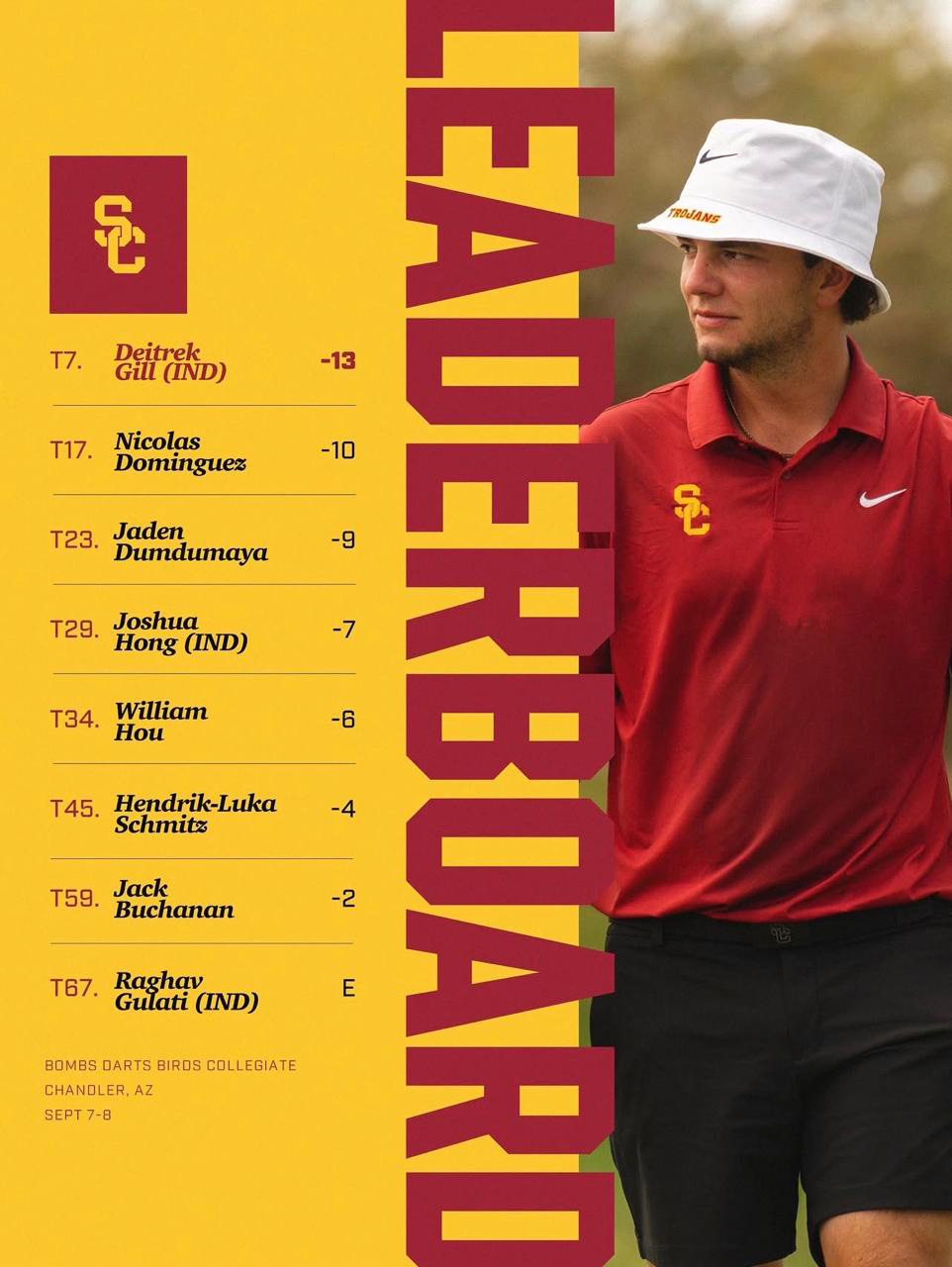
Joshua Hong completed his USC debut at the Bombs Darts Birds Collegiate , competing as an individual and finishing T29 at 209 (-7) with rounds of 71, 68, and 70.
The result stands as Joshua’s first official tournament record with USC Men’s Golf and provides an early reference point for his transition into the program’s competitive environment.
Although competing as an individual, Joshua recorded the fourth-best 54-hole total among the eight USC players entered in the event.
USC’s official recap noted that Joshua recorded all three rounds under par and that his 209 total matched the second-best tournament score of his collegiate career.
The opening event does not define the full season position. It begins the process of building trust, consistency, and readiness within a deeper USC roster and a more competitive internal environment.
Joshua’s next stage will continue through daily preparation, tournament execution, and each available competitive opportunity during the fall season.
Internal team selection details remain private team matters. This site will continue to preserve Joshua’s official tournament results, published references, and appropriate season updates as they become part of the public record.
Brazil Amateur Championship — Four-Round Competition Record
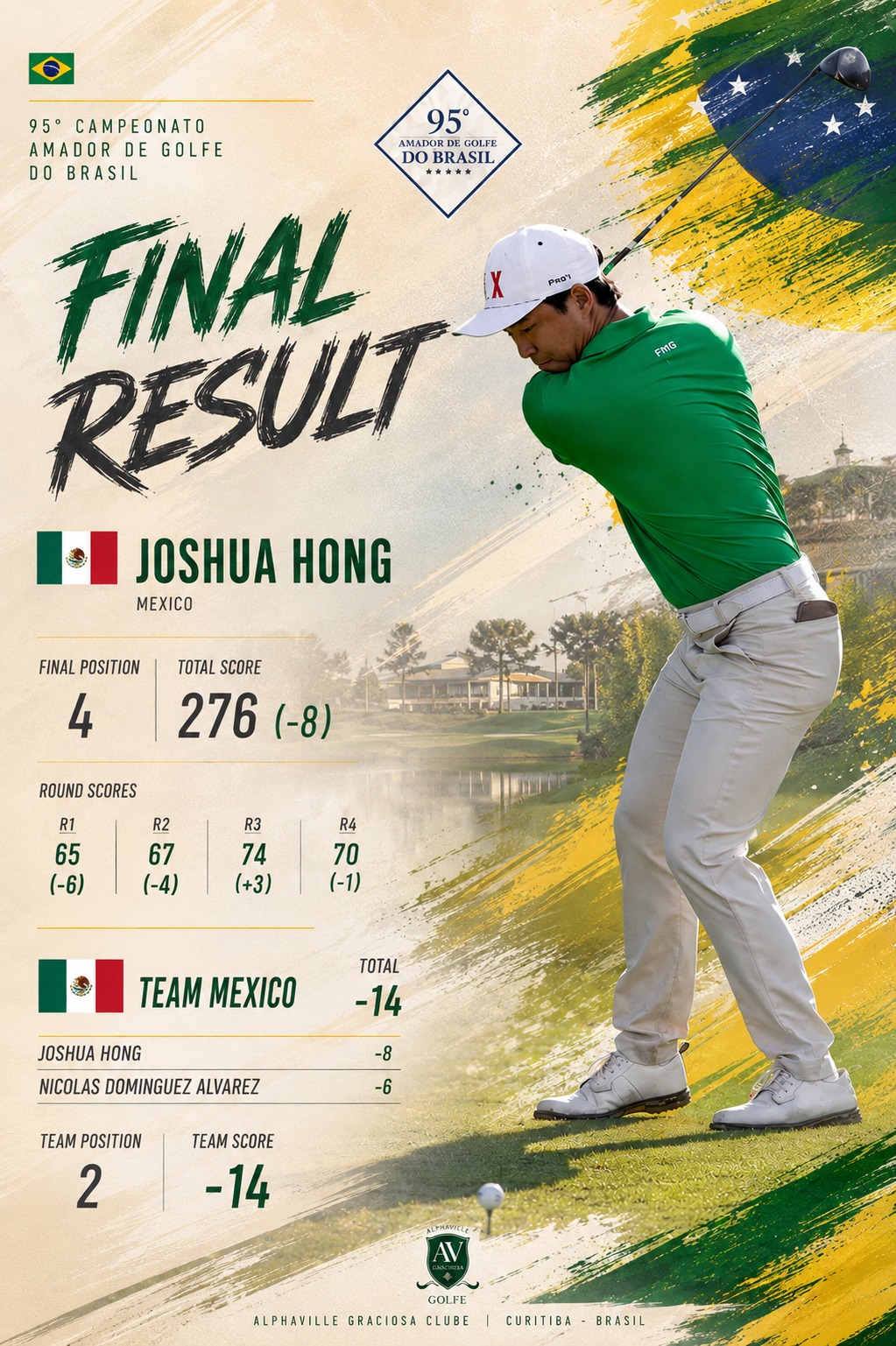
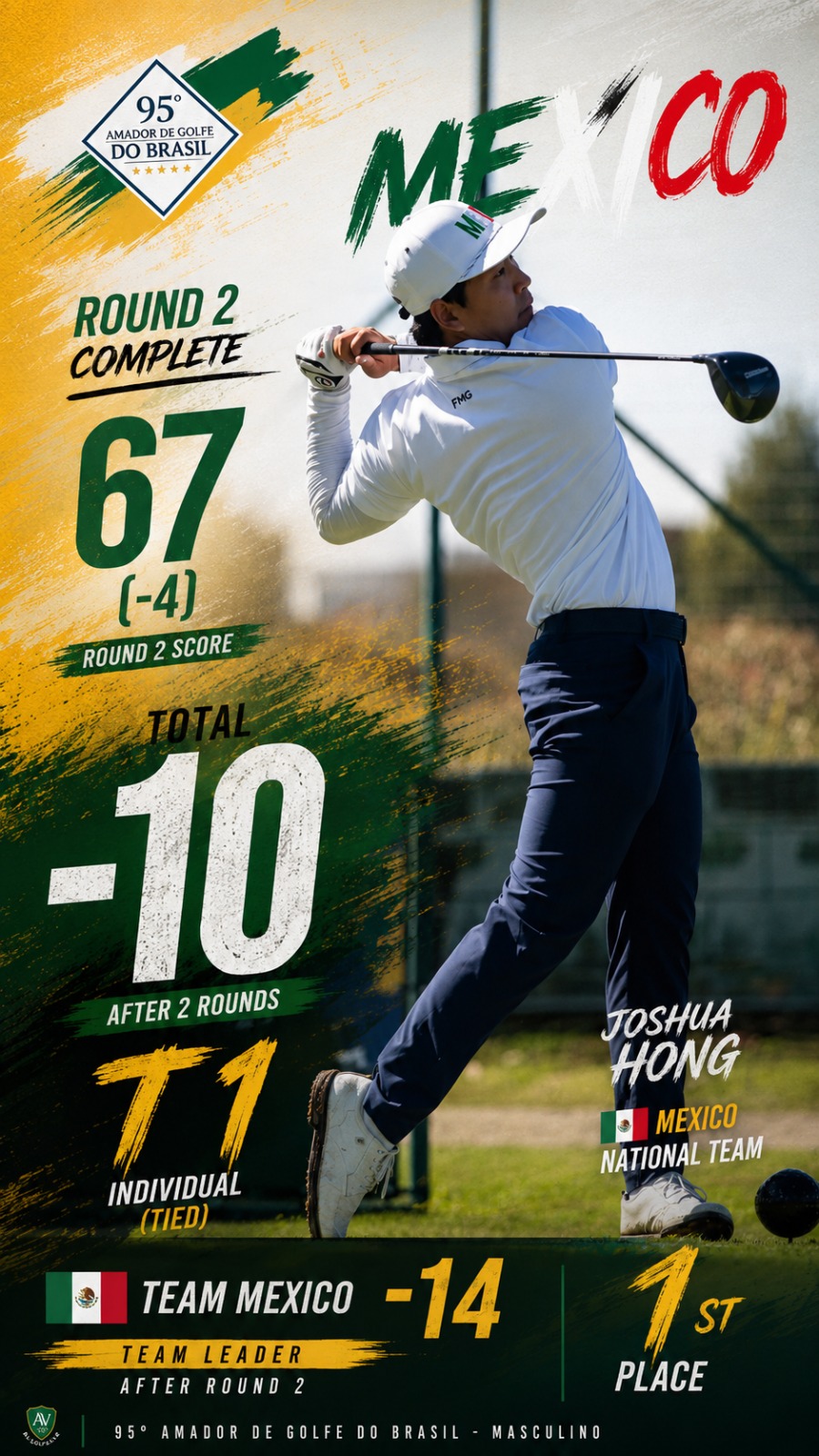
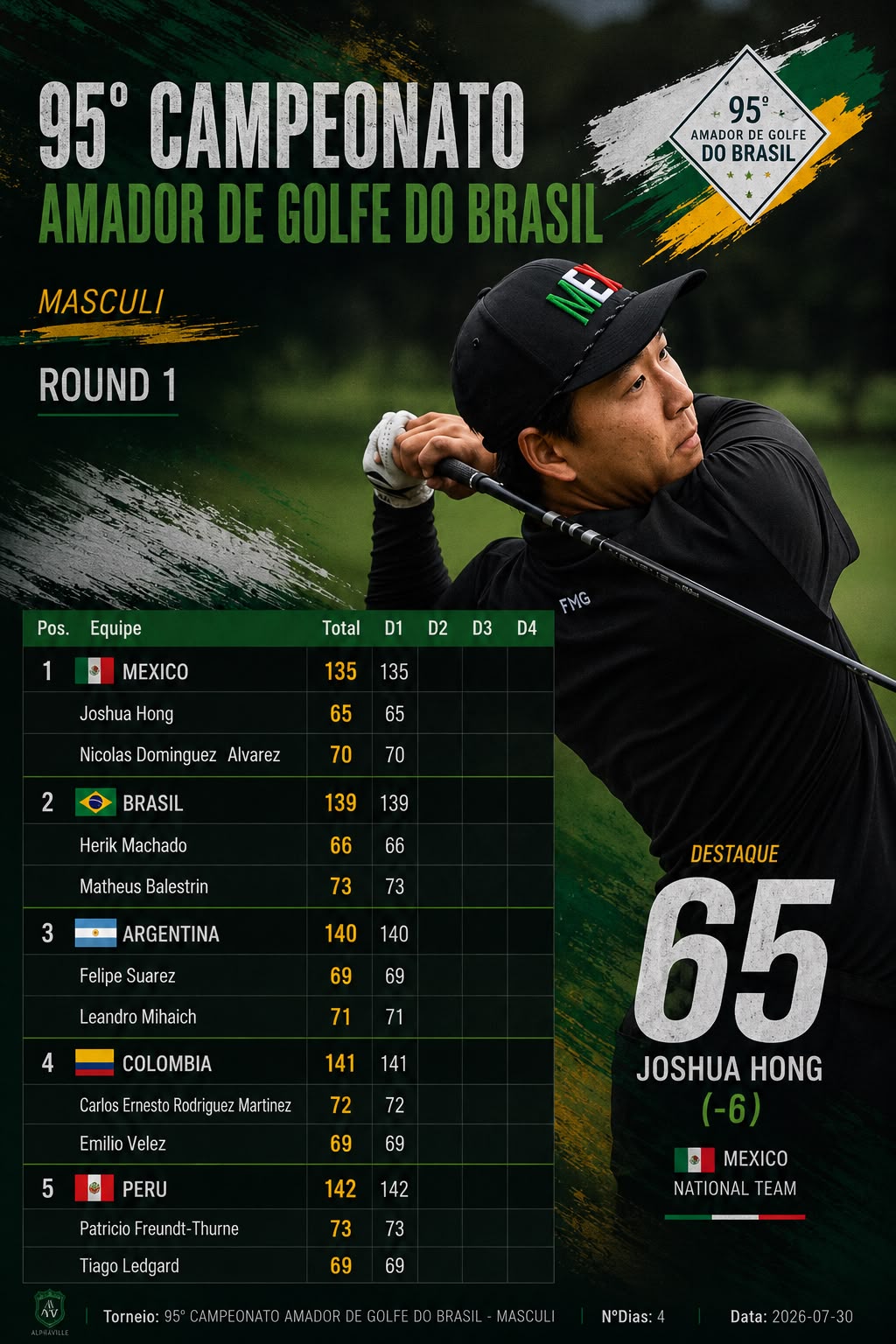
Joshua Hong recorded rounds of 65, 67, 74, and 70 for a 72-hole total of 276 (-8), finishing fourth at the 95th Campeonato Amador de Golfe do Brasil .
The opening-round 65 was bogey-free and included +3.7 strokes gained on approach. The second-round 67 included +2.5 strokes gained around the green and a four-under finish over the final six holes.
The third-round 74 included 91% fairways and +1.1 strokes gained off the tee. The main scoring loss came on the greens, with 35 putts and -4.4 strokes gained putting. The round also included one out-of-bounds penalty.
Joshua completed the championship with a final-round 70. He recorded 91% fairways and 88% greens in regulation. Driving and short-game performance remained positive, while approach proximity and putting conversion limited the final score.
Based on the available strokes-gained tracking, Joshua gained approximately 2.5 strokes off the tee and 5.0 strokes around the green across four rounds. Approach play finished approximately two strokes below the reference level, while putting produced the largest cumulative loss at approximately 6.3 strokes.
He recorded 18 birdies, 46 pars, seven bogeys, and one triple bogey across 72 holes.
Joshua competed for Mexico alongside Nicolas Dominguez. Joshua finished at -8 and Nicolas at -6 for a combined team score of -14. Mexico finished second in the international team competition, one stroke behind Colombia.
Mexican Amateur Championship — Two-Round Record and Next Preparation Phase
Joshua Hong recorded rounds of 77 and 73 for a 36-hole total of 150 (+8) at Club Campestre de la Ciudad de México. He finished one stroke outside the cut line.
The driver and overall ball-striking were inconsistent during the preparation period and tournament rounds. The second-round 73 was a four-stroke improvement from the opening round, but the two-day total remained outside the required number.
The tournament is recorded as part of the summer competition schedule. No broader technical changes are being drawn from the result.
Approximately ten days remain before the next event in Brazil . The preparation period will be used for physical recovery, restoration of normal practice rhythm, and adjustment to the cooler conditions of the Brazilian winter.
Joshua will next compete for Mexico alongside USC teammate @Nicolas Dominguez , with attention now directed toward the upcoming event and its preparation requirements.
U.S. Amateur Final Qualifying — Preparation Window, Physical Feel, and Scoring Conversion
The U.S. Amateur Championship Final Qualifying came after a disrupted preparation window, with Joshua managing illness from the days before travel through competition day.
The result stands as a one-day qualifier result, but the round still provided a useful technical read. Even without full physical rhythm and feel, Joshua continued to create scoring opportunities through his tee-to-green play.
The main scoring gap came from conversion rather than a need to change the overall ball-striking profile. In a compressed qualifying format, missed par-5 opportunities, short-range putting, and makeable birdie chances can quickly define the final margin.
The technical takeaway is straightforward: recover physically, maintain the current swing structure, and convert the scoring chances created by solid tee-to-green play more efficiently when the format leaves little room for missed opportunities.
The qualifier becomes a practical reference point in Joshua’s summer sequence: the underlying tee-to-green baseline remains intact, while the next scoring step is improving conversion efficiency under competitive pressure.
From Portal Entry to USC Signing — A June 2026 Transition Timeline
USC Men’s Golf became the clear fit for Joshua Hong’s next stage of development during the opening hours of the transfer process. After conversations with Coach Mark Hankins and Coach Kolton Lapa, Joshua committed to USC Men’s Golf on June 4, 2026.
The decision represented more than a change of program. It marked a new development path, a broader competitive stage, and an opportunity to continue growing as a student-athlete within USC Men’s Golf.
After completing his freshman season at UTSA, Joshua entered the NCAA Transfer Portal on June 4, 2026.
Joshua and his family had been waiting based on a Mexico morning timeline, not realizing that the portal process was operating on U.S. Eastern Time. As a result, the entry became active earlier in Mexico than they had anticipated; by the time Joshua woke up, calls and communication around the transfer process had already begun.
The early timing gave the process an immediate pace. Shortly after the entry became visible, the transfer process moved quickly, and USC became the right fit for Joshua’s next chapter.
The commitment was followed by the required administrative, academic, compliance, and transfer steps. On June 22, 2026, Joshua officially signed with USC Men’s Golf, confirming the next chapter of his collegiate golf career.
Joshua is especially grateful to UTSA Men’s Golf Head Coach Matt Wernecke for his guidance, support, and positive recommendation during the transfer process. That support was meaningful to Joshua and his family.
He also appreciates the UTSA Men’s Golf staff and his teammates for the opportunity, trust, and competitive foundation established during his freshman season.
As Joshua begins his next chapter with USC Men’s Golf, he is thankful for the opportunity and vision for his continued development, while also recognizing the meaningful foundation built at UTSA during his first NCAA season.
Four Under-Par Rounds, Strong-Field Sample, and a Week Shaped by Hospitality
The Dogwood Invitational became more than a tournament result. For Joshua Hong, it was the first major summer amateur competition after committing to USC, and it provided both a competitive test and a meaningful experience inside a respected traditional invitational setting.
Joshua completed the week with rounds of 69, 71, 69, and 70, finishing T18 at 279, 9-under par. Across four rounds, he stayed under par each day. The result showed consistency in a strong field while also leaving clear room for future scoring growth, especially through putting conversion.
The strongest technical signal came from tee-to-green control. Round 2 included 16 greens in regulation, and Round 3 included all 18 greens in regulation. Those numbers gave the week a deeper meaning than the final score alone: the ball-striking created enough chances to suggest that the scoring ceiling remains higher than the recorded total.
The week also carried a personal layer. Joshua was able to share the tournament experience with his friend Tobey, who also competed in the event, making the week meaningful not only as a competitive test but also as a shared summer amateur golf experience.
Joshua and his family are especially grateful to Andy Brock, Cristy Brock, Drew Brock, and The Brock Family for their generosity throughout the Dogwood Invitational. After a storm delay of more than two hours, Andy still came to the airport, welcomed Joshua, and helped him get directly to the golf course, where he was able to play five holes after arrival.
Throughout the week, Joshua was welcomed with meals, a warm place to stay, and a home environment that helped him feel settled away from home. Andy and Drew also supported him as caddies during the event, adding a meaningful layer of care to the competition experience.
For Joshua, the Dogwood Invitational was not only four tournament rounds. It was a week of competition, adjustment, gratitude, friendship, and connection with people who helped make the experience possible.
As Joshua continues into the summer schedule, this week becomes part of his growing identity as a player: a competitor learning to turn strong ball-striking into deeper scoring, a student-athlete beginning his next chapter, and a young golfer learning to carry gratitude with him as part of the journey.